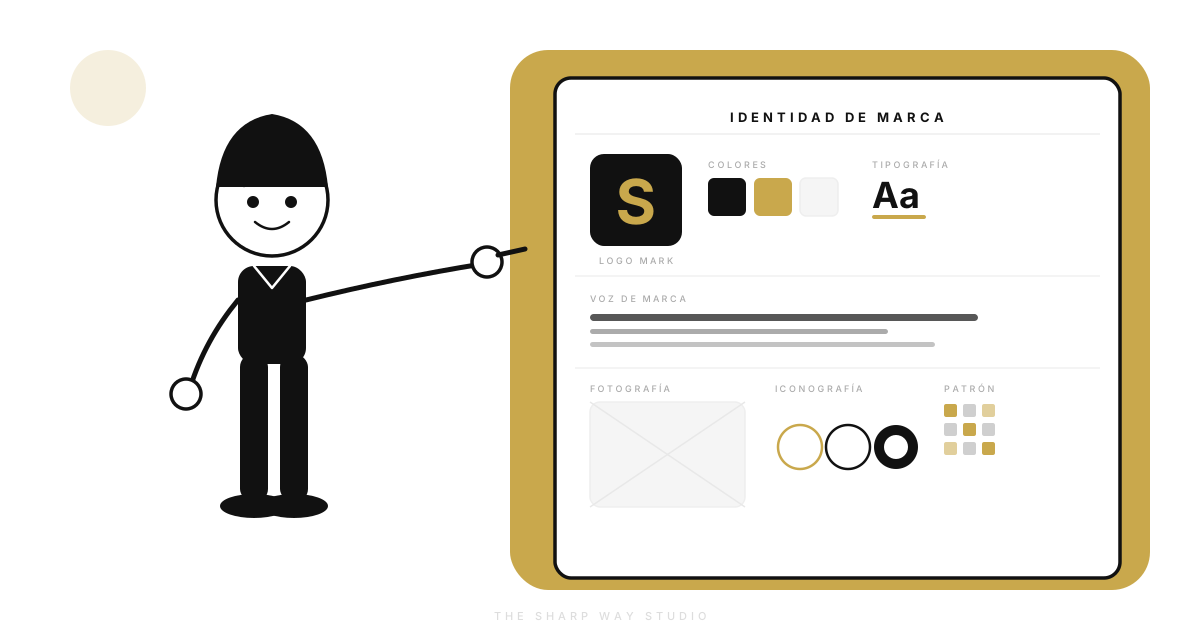
Why branding is not a logo — it's a complete system
If someone asks you what branding is, your first answer is probably: colours, the logo, the name. It's one of the most common misunderstandings in business — and one of the most costly.
If someone asks you what branding is, your first answer is probably: colours, the logo, the name. And you're not alone. It's one of the most common misunderstandings in the business world — and one of the most costly.
"Branding is not what you say you are. It's what others feel when they think of you."
The mistake most people make
When an entrepreneur or business owner thinks about branding, they generally think of one thing: the logo. Or maybe they add colours and typography. And with that they believe they're done.
The problem is that's only the surface. It's like saying a house is just the paint on the walls. Technically it's part of it, but without structure, without foundations, without interior design, it's not a house — it's a facade.
Branding is exactly that: the complete structure of how your business presents itself, communicates and is perceived in the world.
So what is branding really?
Branding is the set of decisions — visual, verbal and emotional — that define how your business exists in the minds of people. It's how you show yourself to the world: your voice, your tone, your story, the mark you want to leave.
But it goes further than that. Branding is everything your business needs to attract its ideal client, communicate its value clearly and build trust before anyone has even contacted you.
A system has several parts. These are the main ones:
- The logo, colours, typefaces, icons, patterns. Everything that is seen. Your visual identity.
- How you write, how you speak, whether you're formal or approachable, serious or witty. Your voice and tone.
- What you offer, to whom, and why you're different from everyone else. Your value proposition.
- Where you come from, why your business exists, what drives you. Your story.
- How someone feels from the moment they discover you until they hire you and work with you. The client experience.
- The place you occupy in your client's mind. Not just what you do, but how they remember you. Your positioning.
"A logo without a system is a face without personality. You can see it, but you remember nothing about it."
Branding is also psychology
Branding is perhaps the most powerful part — and the least talked about. When you build a well-thought-out brand, you're not just making aesthetic decisions. You're making psychological ones.
Every colour you choose activates an emotion. Blue conveys trust. Red generates urgency. Green evokes strength, health, calm. Black projects exclusivity. Yellow communicates optimism. These associations aren't accidental — they're the result of decades of consumer psychology, working in your favour or against you whether you decide it or not.
A well-built brand doesn't just look good. It feels good. It becomes recognisable. And the people who encounter it become natural promoters.
How to start building it
The good news is that all of this can be designed. You don't need to be a large company to have solid branding. What you need is clarity and a system.
A Brand Guide or Brand Manual is the document that centralises all these decisions. It's not just for your designer or your content manager — it's for you. So that every time you make a communication decision, you have a clear criterion. No improvising. No contradictions.
Frequently asked questions
What is branding really?
Branding is the complete system of how a business presents itself, communicates and is perceived in the world. It goes far beyond the logo — it includes visual identity, voice and tone, value proposition, story, client experience and positioning. It's the difference between a business that is seen and one that is remembered.
Is the logo the most important part of branding?
The logo is only the most visible part of branding, not branding itself. Without a system behind it — voice, values, value proposition, client experience — a logo doesn't communicate or build trust on its own. The logo is the tip of the iceberg.
How does branding affect sales?
Well-built branding generates trust before the client makes the decision to get in touch. It reduces friction in the buying process, allows you to charge higher prices without having to continuously justify them, and turns clients into natural brand advocates.
What is a Brand Guide or Brand Manual?
It's the document that centralises all brand system decisions: visual identity, typefaces, colours, communication tone, correct and incorrect uses. It's the tool that guarantees consistency at every client touchpoint, regardless of who creates the content.
Does a small business need branding?
Yes. For a small business, branding is even more important because it doesn't have the advertising budget of a large brand. Consistent branding allows competing with larger companies without depending on volume. Clarity and consistency are perceived as professionalism — and professionalism builds trust.
by The Sharp Way Studio