Projects we can build for your company
Each one starts from a real operational problem. Here is the type of systems and platforms Sharp can develop — what it solves and why your company needs it.
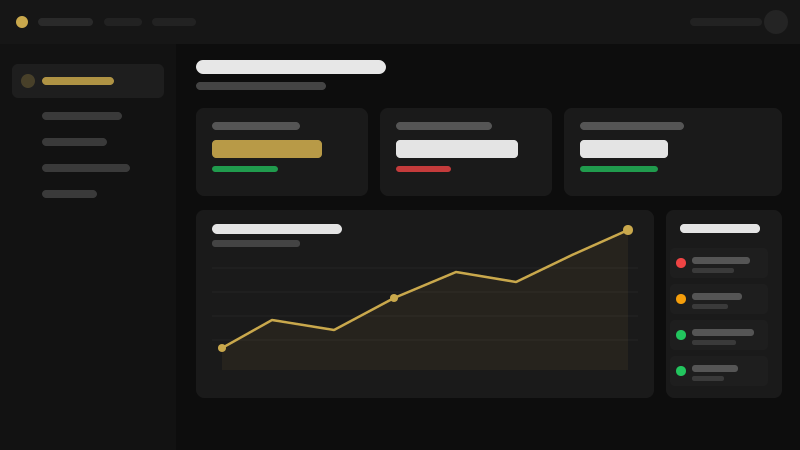
Company nervous system
The problem
The executive starts the day without knowing which front needs attention. The company reacts instead of anticipating.
What we build
A system that monitors the entire operation in real time and delivers each morning the 3–5 things that truly matter that day — with context and suggested action. Not a dashboard to explore, but intelligence that works while the team sleeps.
Why your company needs it
Companies that react are always one step behind those that anticipate. The difference between an executive who makes decisions with today's data and one operating on yesterday's information translates directly into response speed and competitiveness. This type of system shifts operations from reactive to proactive — without hiring more people or reviewing more reports.
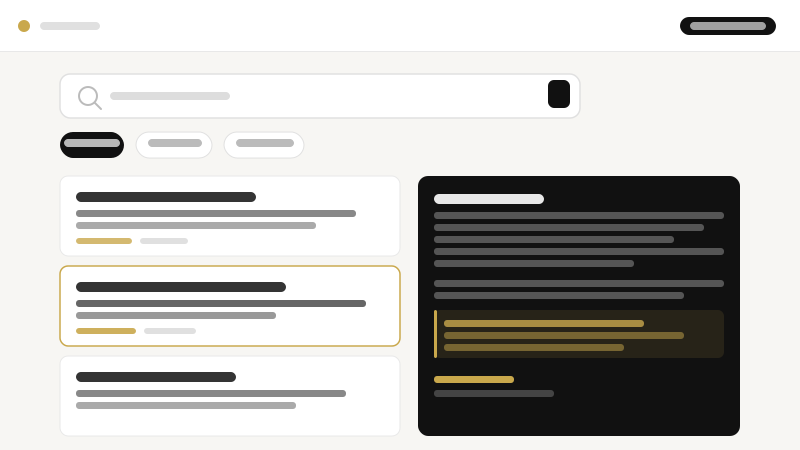
Queryable institutional memory
The problem
The most valuable company knowledge lives in people's heads or in files nobody can find. When someone leaves, they take years of context with them.
What we build
All company knowledge — contracts, projects, decisions, procedures — queryable in seconds by anyone on the team. Ask in natural language and get the exact answer, with the source. Not a document search — an answer.
Why your company needs it
Mid-sized companies lose up to 30% of productivity in time spent searching for information that already exists somewhere. Additionally, depending on specific people to access knowledge is a real operational risk: when the key person is unavailable, the company stalls. An institutional memory system eliminates that bottleneck and makes knowledge scale with the team.
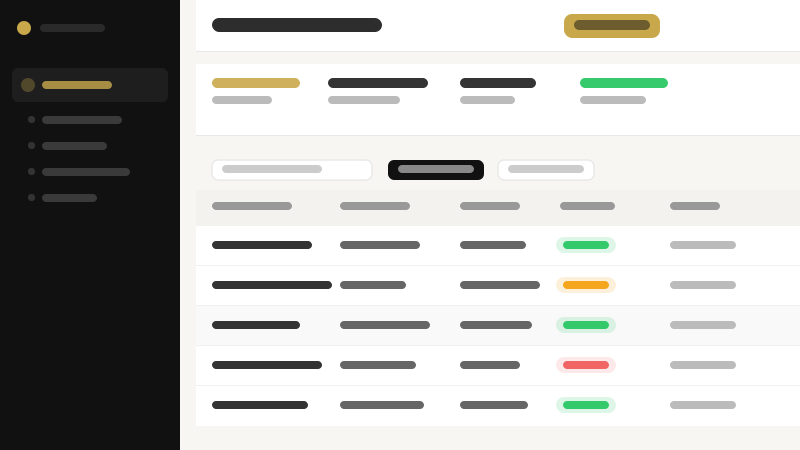
Autonomous operations per process
The problem
There are processes with clear logic and repeatable steps that still consume hours of team time: classifying requests, updating records, sending follow-ups, crossing information between systems.
What we build
A set of specialized systems, each responsible for a specific company process. They work in parallel, coordinate with each other, and escalate to human when they encounter something requiring a decision. The team supervises, not executes.
Why your company needs it
Every hour a professional spends on repeatable tasks is an hour not invested in what truly generates value for the company. Organizations that identify and automate their most mechanical processes free up 20 to 40% of team capacity without hiring anyone. That's human capital that can be redirected to growth, customer care, or innovation.
Predictive operations engine
The problem
Operational problems are rarely surprises — they have prior signals nobody detected in time. The failing team, the leaving client, the breaking equipment: all announced in the previous weeks.
What we build
A system that learns the real patterns of the operation and detects early warning signals before the problem is visible. Each alert arrives with a confidence level and recommended action. Maintenance, retention, and operations shift from reactive to anticipatory.
Why your company needs it
The biggest costs in an operation are not the visible ones — they're the ones that could have been prevented. A departing client, machinery failing during peak season, a team losing performance: all of them signal before collapsing. Companies that detect those early signals invest in prevention, not emergency repair — and that difference can mean hundreds of thousands in annual savings.
Conversational system queries
The problem
The company has systems with valuable data, but extracting it requires navigating the system, knowing the right filters, knowing which module holds what. 80% of the team uses 20% of the system.
What we build
A layer that connects to company data and allows querying it in natural language from any channel. Anyone gets the data they need in seconds — without exporting to Excel, without asking someone to generate it, without waiting for Friday's report.
Why your company needs it
Management systems accumulate years of valuable data that teams can't leverage because of access friction. When getting a data point requires 4 clicks and knowing the right filter, 80% of the team stops trying — and the company makes decisions without information. Eliminating that friction multiplies the real use of data the company already has, without investing in new systems.
Fire engineering platform
The problem
Engineers plan each installation in a scattered way. Technical work happens outside any system — no centralized history, no management visibility.
What we build
Technical planner where the engineer works directly on the floor plan and the system validates the distribution. Automatic generation of the installation report, multi-client operations panel, field technical team panel, and client portal with history and certificates.
Why your company needs it
In regulated technical industries, planning errors generate costly rework and expose the company to legal liability. Companies that digitize their technical process significantly reduce distribution errors and accelerate client delivery because the report is generated automatically — not written by hand after each installation.
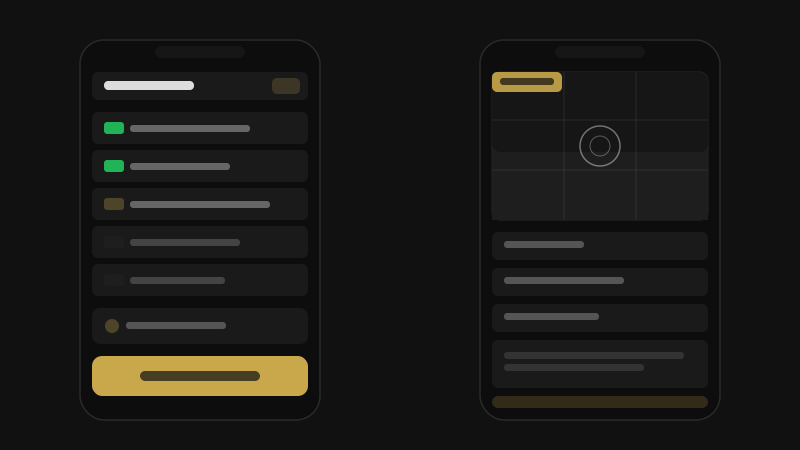
Technical inspection and certification system
The problem
Technicians go to the field with paper forms. The field → report → client process takes more time than it should and leaves no reliable traceability.
What we build
Mobile app for completing the field inspection with geotagged photos. When the inspection is closed, the technical report is automatically generated as a PDF with the inspector's digital signature. Client portal with history and complete digital chain of custody.
Why your company needs it
B2B client trust is built on reliable documentation and real traceability. Technical service companies that deliver digital reports with complete chain of custody are perceived as more professional, access contracts that analog companies cannot win, and are legally protected against any subsequent claims about work performed.
Industrial maintenance management
The problem
Preventive schedules live in spreadsheets. Interventions end up in chats. Billing is manually reconstructed at the end of the month.
What we build
Smart preventive maintenance calendar that automatically generates orders by client and equipment. Field technician app with previous intervention history. Parts and inventory control. Automated billing upon closing each intervention.
Why your company needs it
Reactive maintenance always costs more than preventive — not just in repairs, but in lost time, dissatisfied clients, and emergencies that interrupt operations. Technical service companies that automate their preventive schedules reduce emergency interventions and bill more because every intervention is documented and closed — not lost in WhatsApp conversations.
Batch manufacturing operations system
The problem
Sales calls production to confirm availability before quoting. Actual inventory is known at end of day. Partial delivery tracking is done manually.
What we build
Unified operational panel where sales and administration see available stock, active orders, and ongoing production in real time. Batch control from mobile for the plant manager. Partial delivery management, internal quoter, and machinery preventive maintenance.
Why your company needs it
In manufacturing, real-time information is money. Every call sales makes to production to confirm availability adds up to thousands of hours per year. Manufacturing companies with real visibility of the factory floor quote faster, make fewer inventory errors, and win business that companies operating on delayed information lose.
Clinical platform for technical specialties
The problem
The specialty's technical clinical process doesn't fit in a generic system. Each professional's clinical knowledge exists only in their head.
What we build
Specialized clinical record with the exact fields for that specialty's protocol. Treatment plan with session-by-session tracking. Management panel with aggregated evolution view. Patient portal with history and reminders. Evolution report generation for physicians and insurers.
Why your company needs it
Generic clinical systems force specialists to adapt their workflow to the software instead of the other way around. Time a healthcare professional spends on administrative work that adds no value to the patient is time that could go toward more consultations or higher quality care. Specialists and clinics with systems designed for their specific workflow document better, justify their fees more solidly, and open doors to insurer reimbursements.
Construction site management system
The problem
The construction director lives on the phone. Client reports are prepared by reconstructing what someone remembers from the week. Materials and budget control lives in Excel.
What we build
Central panel with real-time status of each active site. Field reporting app for foremen: progress, materials, incidents, and photos in under 3 minutes. Materials versus budget control. Automatic weekly client report generated from field records.
Why your company needs it
A construction director who lives putting out fires can't actually direct — they're executing. Construction companies with real field visibility spend less time on reactive control and more on progress. An automatic report generated from the field is worth more for the client relationship than an Excel document assembled Friday afternoon — and it costs zero hours of work.
Industrial equipment rental platform
The problem
Inventory availability lives in the manager's head. Contracts are made in Word. Equipment maintenance is reactive and billing is reconstructed at month's end.
What we build
Real-time inventory with interactive availability calendar. Complete rental cycle: quotation, digital signature, condition checklist with photos at departure and return, in-rental tracking. Client portal. Preventive maintenance and automated billing.
Why your company needs it
Equipment rental companies without a digital system lose money in three simultaneous ways: availability conflicts that damage client relationships, reactive maintenance that takes equipment out of rotation at the worst moment, and rentals that are billed with errors or simply not billed at all. A real-time inventory system with a complete digitized rental cycle turns the same fleet into an operation that bills more with fewer errors and less administrative burden.
Commercial and operational process automation
The problem
The team spends hours on tasks with clear logic: classifying requests, generating first draft proposals, updating CRM, sending follow-ups. Everything has a repeatable pattern.
What we build
Specialized systems per process — lead qualification, proposal generation, commercial follow-up, internal knowledge base — integrated with the tools the client already uses. Supervision panel with full control over each process's autonomy level.
Why your company needs it
B2B companies that take more than 24 hours to respond to a qualified lead lose up to 70% of those opportunities to faster competitors. Automating the first contact, qualification, and initial proposal generation doesn't replace the salesperson — it frees them to focus on prospects already mature enough to close, where human judgment truly matters.
SaaS for a technical or professional vertical
The problem
The founder knows the problem from the inside and has the business judgment. What they don't have is the technical team to build it with the quality the product needs to compete from day one.
What we build
Product architecture from the start, full design (UX/UI), core development, payments and subscriptions system, deploy and full handover. The first real user gets a quality experience — not the feeling of using a beta.
Why your company needs it
The moment of launching a digital product is one of the most costly in terms of errors if not done right. A weak architecture becomes technical debt that limits growth: when the first 500 users arrive, the product doesn't scale and you have to rebuild what should have been done right from the start. Founders who build on solid foundations from day one don't have to rebuild when the product starts to grow.
Premium website with conversion system
The problem
The site exists but doesn't work for the company. The prospect doesn't understand in 10 seconds what the company does or why to consider them.
What we build
Design with its own identity — nothing that looks like a template. Content strategy with a narrative arc. Development with performance, technical SEO, and mobile optimization. Conversion system designed to lead the right visitor to a concrete action.
Why your company needs it
The website is the only salesperson who works 24 hours without a salary. A prospect who arrives at the site and doesn't understand what the company does in the first 10 seconds leaves — and the company never knows. Companies with sites that communicate with clarity and visual credibility shorten the sales cycle because the prospect arrives at the first meeting with their criteria already formed, not asking what the company does.
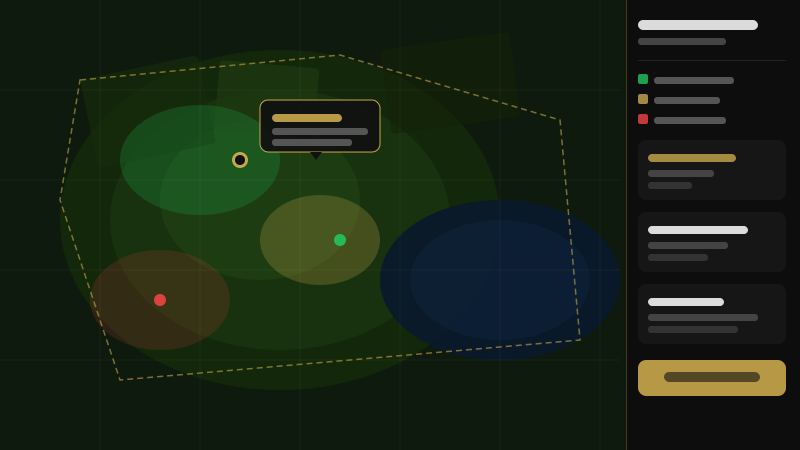
Aerial analysis of land and farms
The problem
Knowing the real state of large land requires weeks of fieldwork. Buying, selling, or managing land is done largely blind.
What we build
Processing of drone or satellite imagery that converts a flight into real information: topographic map, terrain and vegetation cover classification, vegetation indices, water bodies, and parcel boundaries. Historical comparison between flights, area calculation, automatic technical reports, and owner portal.
Why your company needs it
Land decisions made with incomplete information cost millions. An aerial inspection that used to take weeks becomes a technical report in hours. Agro and real estate companies that incorporate geospatial analysis into their decision process buy with certainty, manage with evidence, and sell with technical arguments their competitors don't have.
Biometric access control
The problem
Cards get lost, PINs are shared. In critical facilities there's no real certainty of who accessed where and when. Attendance control depends on someone marking it.
What we build
Automatic identification system at access points — no card, no PIN. Zone and access level management by role. Automated attendance control by shift. Visitor management with documented temporary access. Audit panel with complete history by person, zone, and time.
Why your company needs it
Cards and PINs are the most common weak point in any facility's physical security: they're shared, lost, and cloned. In critical zones — servers, labs, archives, production areas — the cost of unauthorized access far exceeds the cost of prevention. Additionally, organizations with real access traceability comply with audit regulations and reduce insurance premiums.
Intelligent surveillance with behavior analysis
The problem
Cameras record everything but nobody watches everything. Incidents are discovered after they happen. Real-time human monitoring is expensive, inconsistent, and doesn't scale.
What we build
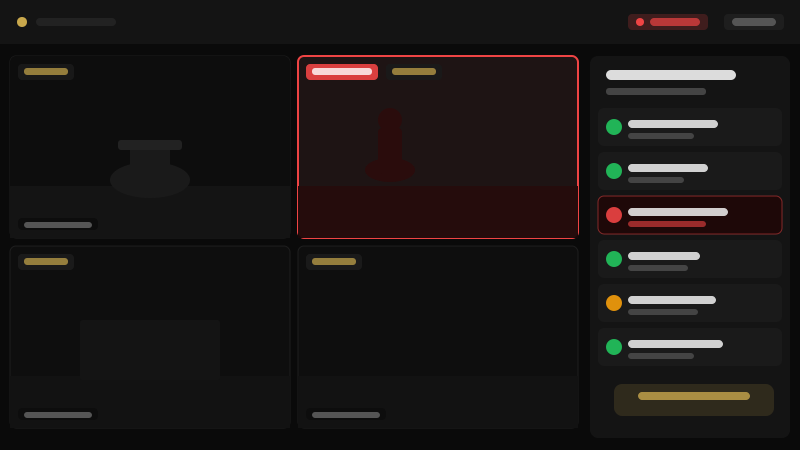
System that processes existing camera feeds and understands what's happening: fallen person, restricted zone, exceeded capacity, abandoned object. Alerts in seconds with image and recent history. Review of classified events without reviewing hours of footage. Security reports by zone and period.
Why your company needs it
Human camera monitoring is inconsistent by nature: human attention fails after 20 minutes of continuous review, especially during night shifts. Facilities that analyze video automatically detect incidents in seconds instead of hours — and that difference between detection and response is, in many cases, the difference between a minor and a major incident.
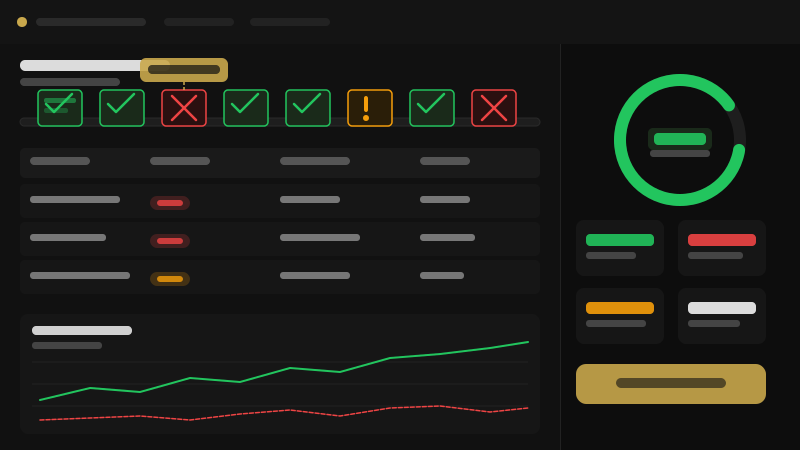
Automated visual inspection in production
The problem
Visual inspection is done by a person watching units pass at speed. The criterion varies by inspector and shift. Defects slip through or are detected when they've already reached the customer.
What we build
System installed on the line that analyzes each unit in real time and classifies in milliseconds: approved, rejected, manual review. Automatic activation of the rejection mechanism. Defect catalogue with history by type, line, and shift. Real-time quality panel for the production manager.
Why your company needs it
A defect that reaches the customer costs 10 times more than one detected on the line. The cost of a return, claim, or recall includes logistics, team time, reputational damage, and in regulated industries, penalties. Companies that inspect automatically on the line capture defects before they leave the factory — and the criterion doesn't vary by inspector, shift, or fatigue level.
Continuous structural monitoring
The problem
Buildings and critical structures deteriorate invisibly. Periodic inspections capture a moment — accumulated damage occurs between one inspection and the next.
What we build
Sensor network installed at critical structure points with continuous 24/7 measurement. Structural health index updated in real time. Anomaly detection before the problem is perceptible in a visual inspection. Trend history for evidence-based maintenance decisions.
Why your company needs it
Unplanned structural failure in critical infrastructure has a cost no contingency plan can fully cover — in lives, in legal liability, in reputation. Periodic inspections detect what is already visible; continuous monitoring detects what is about to be. Organizations with critical assets that monitor in real time make maintenance decisions based on evidence, not arbitrary calendars.
Complete production chain traceability
The problem
When there's a quality problem, the company can't answer in hours where that batch went or which other units are at risk. Paper traceability is an illusion of control.
What we build
End-to-end traceability from raw material to end customer. Each batch with a unique ID that follows it through production, quality, warehouse, and dispatch. Digital chain of custody. B2B client portal with history of what they received. Recall alert system that identifies in minutes which customers are affected.
Why your company needs it
Food, pharmaceutical, and manufacturing companies without digital traceability operate with a hidden risk: when a quality problem arises, they can't respond with certainty. That has two direct consequences — legal exposure in case of an incident, and exclusion from international markets and corporate clients that require certified traceability as a condition of purchase. A complete traceability system isn't just internal control — it's a sales argument.
Does your company have this problem?
Tell us the challenge. We define the system.