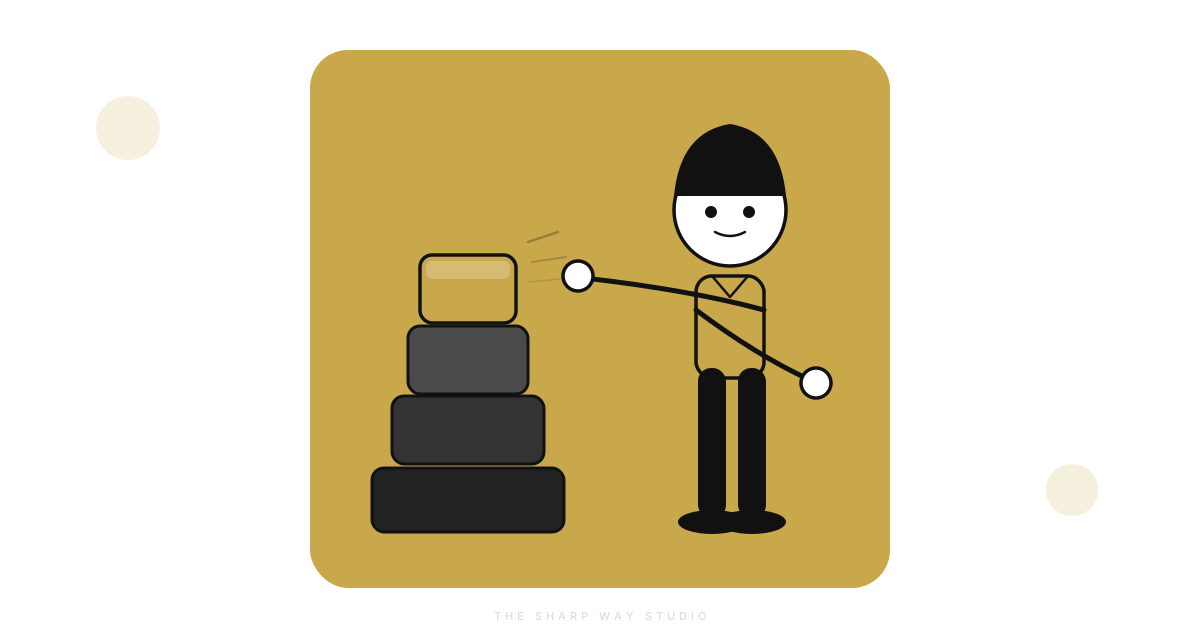
Building without asking permission
Nobody is going to validate you before your time. Nobody is going to tell you that you're ready. Permission to start always comes after you've already started.
Most people we know who haven't started yet are waiting for something. A sign, the right moment, external validation telling them they can now. The problem is that signal rarely comes on its own.
Waiting as a trap
Waiting for 'the right moment' is an elegant way of postponing the discomfort of starting. The right moment doesn't exist as a destination — it exists as a decision. It's the moment someone decides they've waited long enough.
We've seen this many times: someone with a solid idea who has spent months preparing. Taking courses. Researching the competition. Waiting to have more money, more experience, more time. Meanwhile, someone with less preparation and more action is already in the market, learning.
What you actually need to start
It's not what you think. It's not the perfect capital, the finished product or the ideal network. It's much simpler — and much harder to sustain.
- An idea that solves a real problem, even a small one.
- The willingness to learn in the process, not before it.
- Tolerance for uncertainty — not comfort with it, just tolerance.
- Discipline to move forward when no one is applauding.
Permission comes after
Validation doesn't precede action — it follows it. The first clients, the first results, the first time something works: all of that comes after starting, not before. Nobody is going to tell you you're ready before you try.
This doesn't mean launching without thinking. It means distinguishing between genuine preparation and indecision disguised as prudence. The first has a clear end. The second never does.
Something you can't buy
The learning that comes from doing is different from the learning that comes from reading about doing. It can't be bought, can't be accelerated with a course, can't be transferred from another person. It's only acquired by doing it. And that difference, over time, is what separates those who build from those who plan to build.
Building without asking permission isn't arrogance. It's recognizing that the only person whose authorization you need to start is yourself.
Frequently asked questions
How do you know if a business idea is valid before launching?
The only reliable way to validate an idea is to expose it to the market. You can do preliminary research, but real validation comes from real customers paying for your solution. An imperfect product in the market learns faster than a perfect one that never ships.
When are you really ready to start a business?
You'll never feel completely ready — and that's normal. The useful criterion isn't 'do I feel prepared?' but 'do I have enough to take the first step?'. If the answer is yes, that's enough to start.
How do you overcome the fear of failure when starting something new?
Fear of failure usually feeds on what we imagine will happen, not what actually happens. Most real failures are recoverable. What doesn't recover as easily is the time spent not trying.
What separates those who build something real from those who only plan it?
The main difference isn't talent or money — it's the threshold of tolerance for uncertainty and the willingness to act before having all the answers. Those who build decide that the discomfort of starting is less than the discomfort of not doing it.