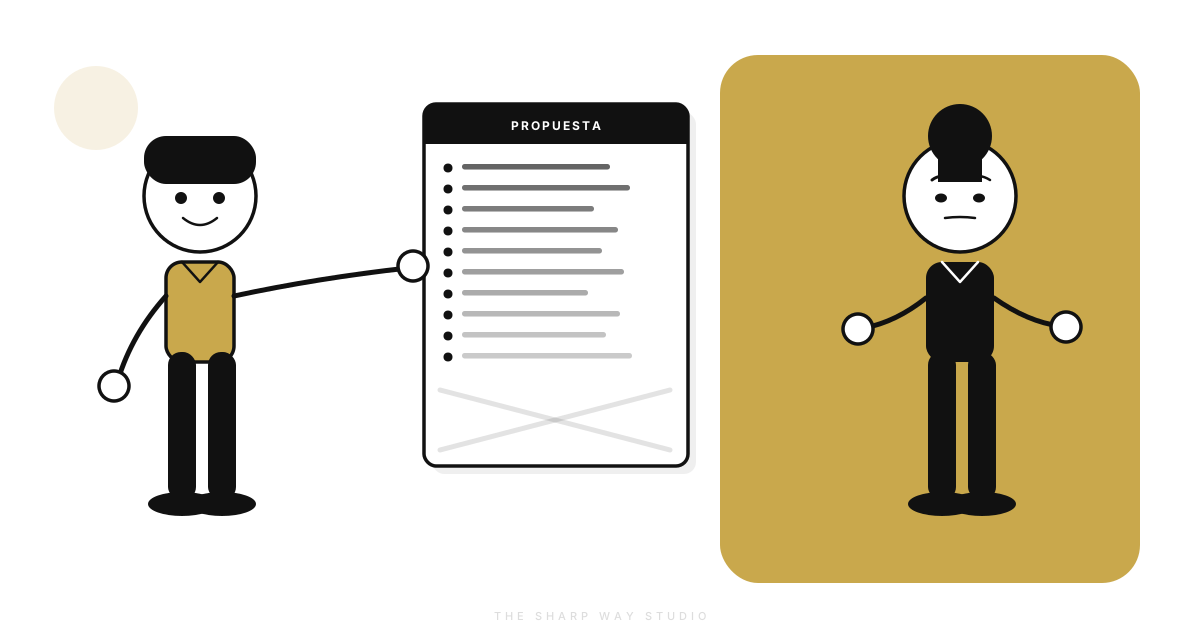
The mistake you make when presenting your proposal (and why you lose clients)
Most proposals fail before the client even gets to the price. Not because it's expensive, but because the proposal talks about what you do, not about the problem they have.
There's a silent way of losing clients that almost nobody detects. It doesn't happen in price negotiations or the final meeting. It happens the moment the client reads your proposal and thinks: 'this isn't what I need'.
The most common mistake: talking about yourself, not them
Most proposals start by describing who you are, what you do and how you do it. The client didn't ask for that. What the client needs to see from the very first paragraph is that you understand their specific problem — not the generic problem of your industry, but theirs.
If your proposal can be sent to ten different clients by only changing the name, it's a template, not a proposal. And clients notice.
Selling deliverables instead of outcomes
'5 pages, responsive design, social media integration.' That's a list of deliverables. The client who wants to grow their business isn't buying pages — they're buying enquiries, sales, trust in their brand.
Proposals that work describe the client's current state, the state they want to reach, and how your work is the bridge between the two. Not features. Outcomes.
Putting the price before the value
When the price appears before the client has understood the full value of what they'll receive, they judge it in a vacuum. They have no context to evaluate it. Any number will seem expensive if they don't understand what problem it solves.
The price should arrive at the end of a narrative, not at the beginning. When the client reaches the number having understood what they get, the conversation changes completely.
What changes when you present well
A well-built proposal makes the client feel that you already understand them before you've started. That you did the work of understanding their context. That you're not just another studio sending bulk quotes. That creates trust before the project begins — and trust is what converts.
Frequently asked questions
Why does the client say it's expensive when it really isn't?
When a price seems expensive, it's usually a perceived value problem, not a real price problem. If the client doesn't clearly understand what problem you solve and what result they get, any number will seem high. The solution isn't to lower the price — it's to better communicate the value before mentioning it.
What should a good service proposal include?
An effective proposal includes: a precise description of the client's problem (not your services), the proposed solution focused on outcomes, the process summarized in clear stages, and the price in the context of the delivered value. The order matters as much as the content.
How do you personalize a proposal without spending too much time?
The key is to have a base structure and personalize the critical elements: the problem diagnosis, the client's specific goal, and a relevant example for their industry. Those three adjustments make a proposal feel completely bespoke without starting from scratch each time.
How long should a service proposal be?
A proposal shouldn't be measured in pages but in clarity. A two-page proposal that answers exactly what the client needs to know beats a ten-page one that repeats irrelevant information. Brevity with precision always wins.